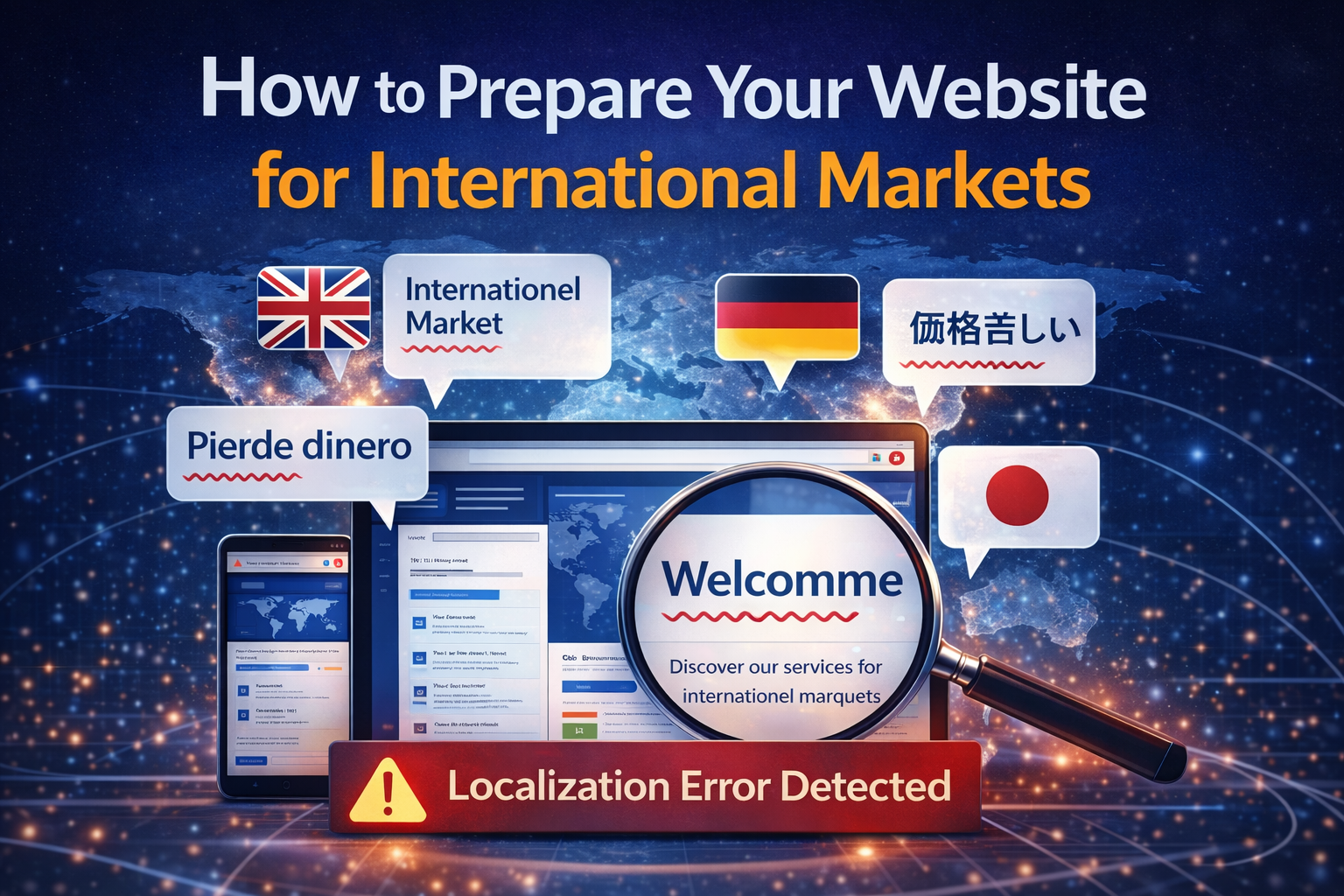

How to Prepare Your Website for International Markets
Expanding into international markets is no longer a long-term ambition reserved for multinational enterprises. For many B2B and technology-driven companies, global visibility becomes a strategic necessity early in their growth journey. Yet while market entry strategies often focus on distribution channels, regulatory compliance, and pricing models, one critical asset is frequently underestimated: the company website.
A website is not simply a digital brochure. It is a trust-building platform, a sales enablement tool, and often the first interaction international prospects have with a brand. When companies begin targeting global audiences, their website must evolve from a single-market asset into a scalable international platform.
Preparing a website for global markets requires thoughtful decisions about content strategy, search visibility, cultural alignment, and technical infrastructure. Organizations that approach this strategically gain a measurable advantage, while those that treat it as a quick translation task risk losing credibility before the first sales conversation.
Why Language Matters in Global Markets
Language plays a crucial role in how companies are perceived internationally. Content that feels awkward, partially adapted, or culturally misaligned can immediately reduce trust. Clear and natural communication signals professionalism and reliability.
In B2B environments especially, credibility is currency. Procurement managers, technical evaluators, and executive decision-makers rely on clear information when assessing potential partners. If messaging appears inconsistent or difficult to understand, it may create unnecessary doubt about the organization’s maturity or its ability to support international clients.
Conversely, well-adapted content signals commitment to the market. It demonstrates that the company understands the needs of regional audiences and is prepared to communicate effectively with them. Language adaptation therefore becomes a strategic component of market positioning rather than a cosmetic improvement.
Structuring Your Website for International Expansion
One of the earliest decisions companies face when preparing for global audiences is how to structure their international website architecture. The way multilingual content is organized can significantly influence search visibility, scalability, and long-term maintenance.
Organizations typically choose between several approaches:
-
Country-specific domains (example.de) – signal a strong local presence but require separate domain authority and maintenance.
-
Subdomains (de.example.com) – allow regional segmentation while remaining connected to the main brand domain.
-
Language subdirectories (example.com/de/) – often the most scalable solution for companies expanding gradually across multiple markets.
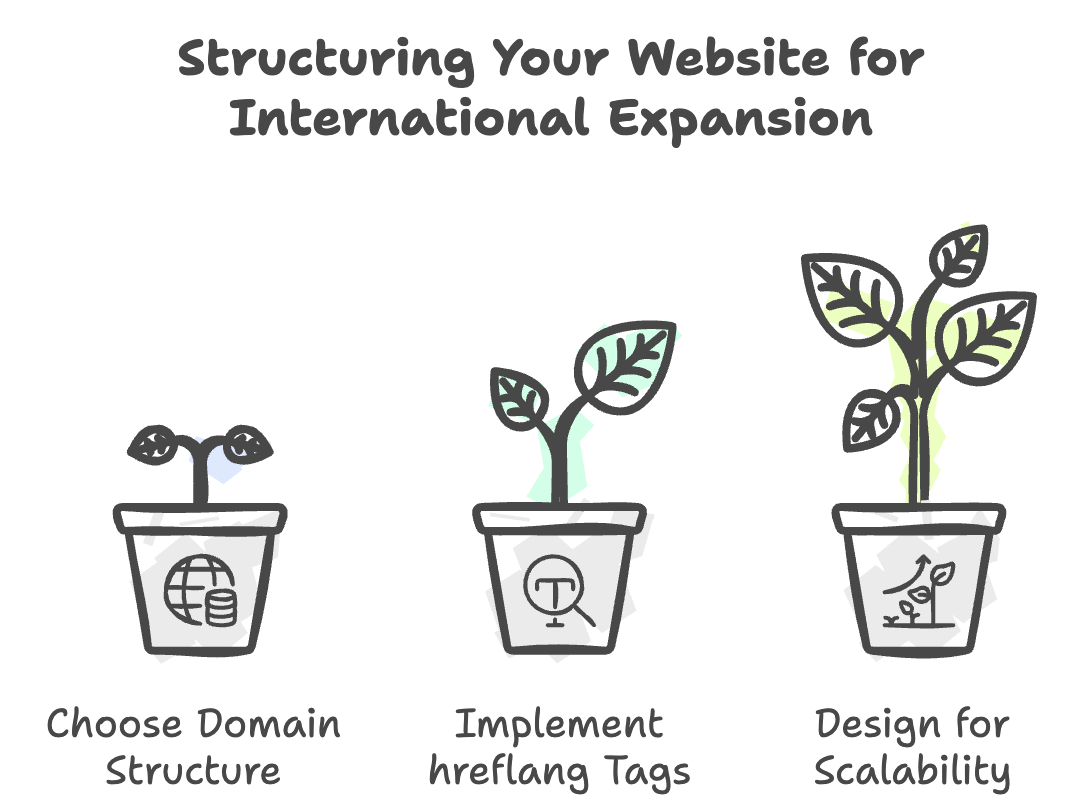
Regardless of the structure chosen, technical implementation must be precise. Search engines rely on signals such as hreflang tags to understand which version of a page should appear in specific regions. Without proper configuration, even well-adapted pages may compete with each other or appear in the wrong markets.
For companies planning long-term international growth, website architecture should be designed for scalability from the beginning, rather than retrofitted after expansion has already started.
International SEO and Metadata Strategy
Visibility is one of the most critical factors in international digital growth. Even well-designed websites cannot generate business value if potential customers cannot find them.
Search behavior varies significantly between regions. Keywords that perform well in one language may not reflect how users search for solutions in another market. Directly translating English keywords rarely produces optimal results, because search intent often differs across industries and cultures.
Effective international SEO requires:
-
Native-language keyword research in each target market
-
Adaptation of page titles and meta descriptions
-
Localized URL structures and structured data
-
Proper technical implementation for multilingual indexing
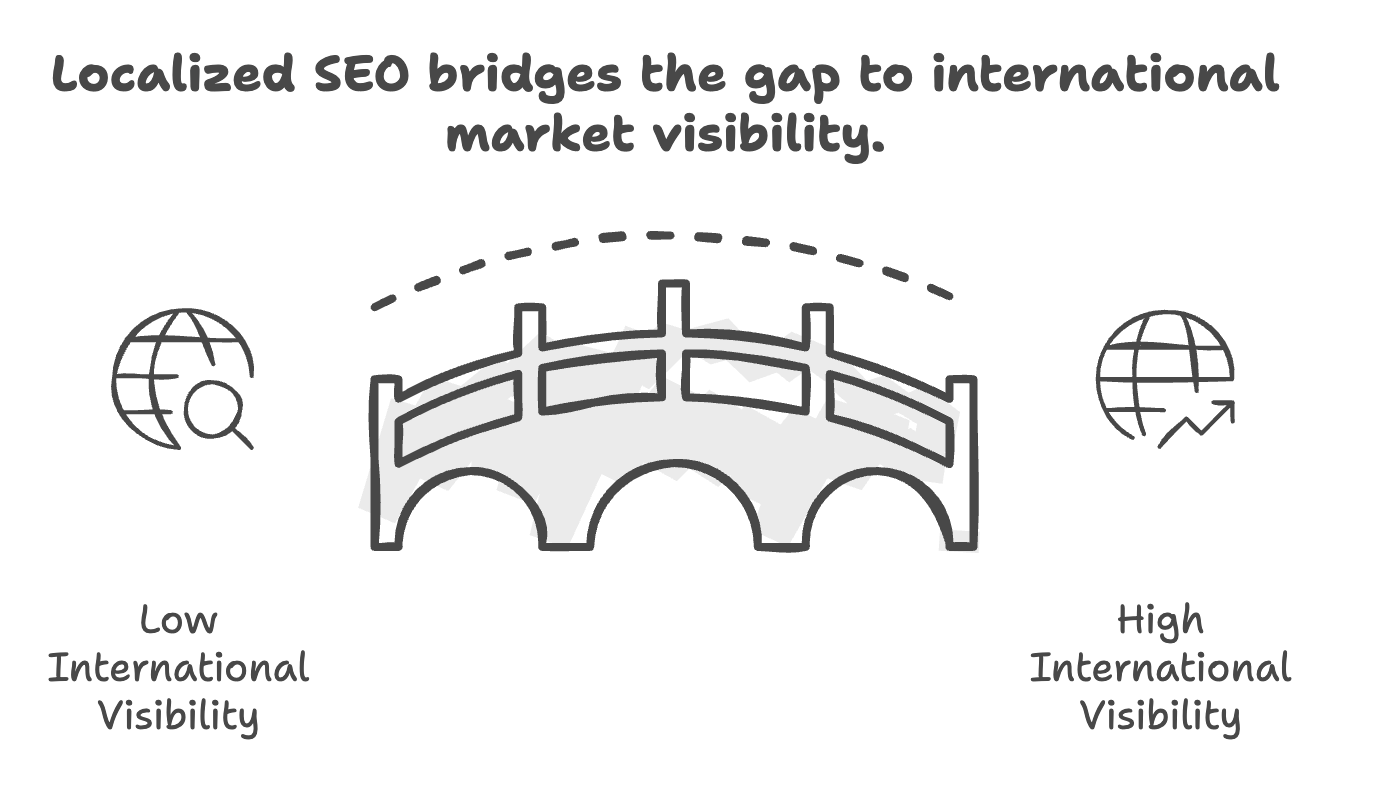
According to the UNCTAD Digital Economy Report 2024, international trade in digitally deliverable products continues to grow strongly, highlighting the expanding role of digital services and online visibility in global markets.
Companies that invest in localized SEO early often gain a substantial advantage in new markets by establishing digital visibility before competitors.
UX Expectations Across Markets
User experience plays a critical role in how international audiences interact with websites. Design choices that feel intuitive in one region may create friction in another.
Basic formatting elements such as currency displays, date formats, measurement systems, and address forms must be adapted to match regional expectations. Even small inconsistencies in these areas can interrupt the user journey and reduce conversion rates.
Beyond formatting, behavioral differences also matter. Some markets prioritize detailed technical information when evaluating products, while others respond more strongly to social proof such as testimonials, case studies, or customer reviews. Trust indicators, privacy assurances, and compliance information may also need different prominence depending on the region.
According to Forrester Research (as cited by Forbes), a well-designed user experience can increase conversion rates by up to 200%, while a superior UX design can boost conversions by up to 400%.
Aligning UX design with regional expectations therefore reduces friction and improves engagement with international audiences.
Multilingual Infrastructure and Scalable Workflows
As organizations expand internationally, website adaptation quickly becomes an ongoing process rather than a one-time project. Product updates, marketing campaigns, and new content initiatives must often be published across multiple languages.
Without the right infrastructure, managing this process can become complex and inefficient.
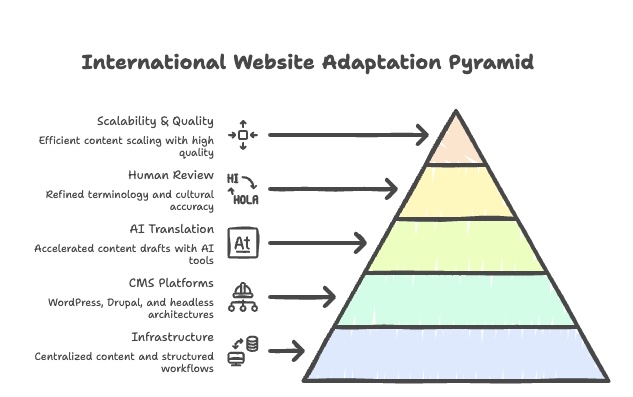
A well-configured multilingual content management system allows companies to centralize content while maintaining structured workflows for language adaptation. Integration with translation management systems (TMS), version control across languages, and streamlined publishing pipelines help ensure consistency as websites grow.
Modern CMS platforms such as WordPress, Drupal, and headless architectures support multilingual environments, but their configuration must align with localization workflows.
Increasingly, organizations combine AI-powered translation tools with human linguistic review. AI can accelerate first drafts for large volumes of content, while human experts refine terminology, tone, and contextual accuracy.
This hybrid approach allows companies to scale content efficiently while maintaining quality and cultural alignment across markets.
Conclusion: Building a Website That Belongs in Every Market

Podcast Generation Contextual Translations Video Dubbing
Delivering outstanding outcomes.