
Where Stereotypes End and Culture Begins
Have you ever come across cultural stereotypes about your country – or about others?
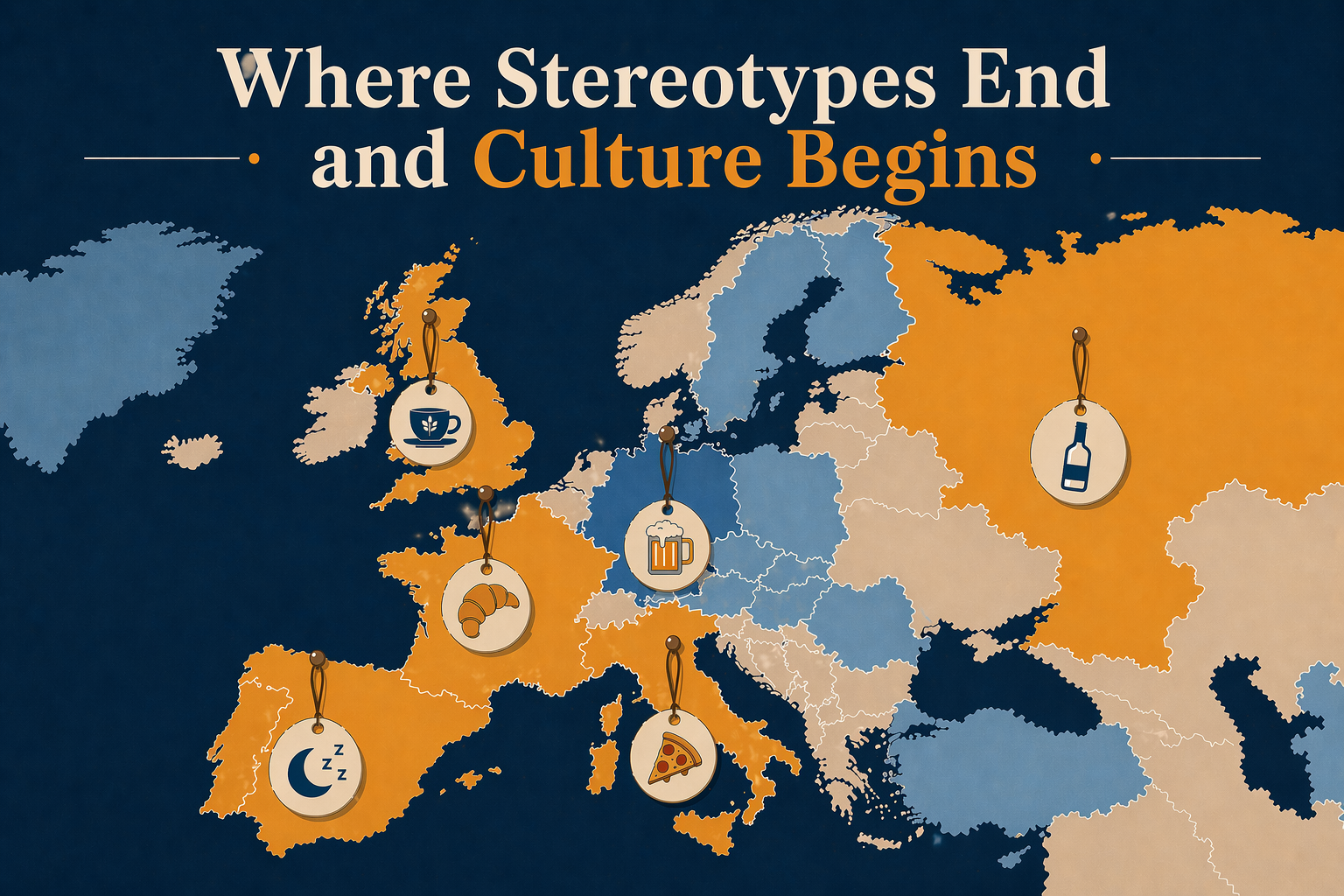
French people are always polite. Spaniards love their afternoon naps. Germans are always on time. Russians drink a lot.
These statements are simple, memorable – and endlessly repeated. We absorb them from films, jokes, and half-remembered travel stories. However, once you look closer, the picture gets a lot more complicated.
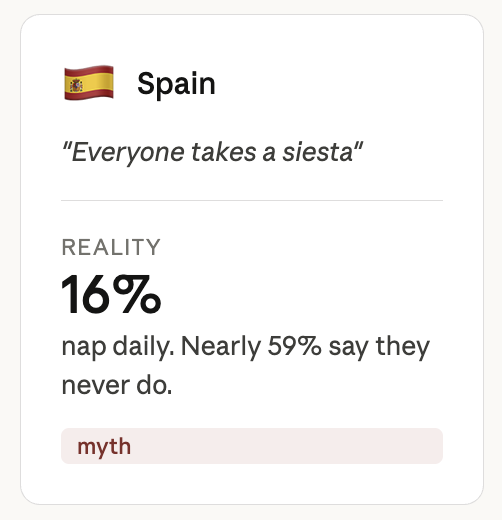
Take Spain. The siesta feels like an almost sacred national institution – yet surveys tell a different story: only around 16% of Spaniards actually nap daily, while nearly 59% say they never do. The tradition lives on more in the imagination than in the bedroom.
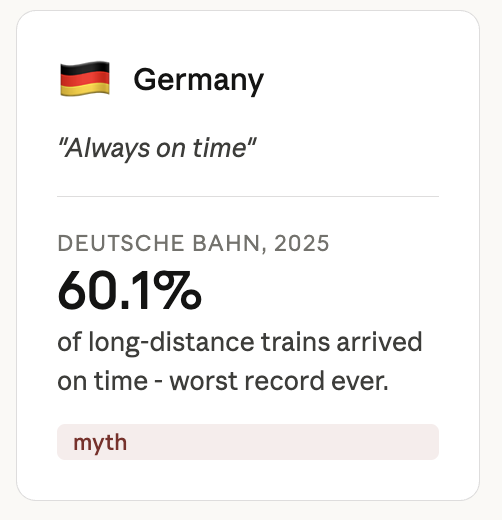
Germany’s reputation for punctuality is so firmly established that it practically runs on its own schedule. Which makes this figure all the more striking: in 2025, only 60.1% of Deutsche Bahn’s long-distance trains arrived on time – the worst annual result on record. Apparently, even the most disciplined of reputations can miss its connection.
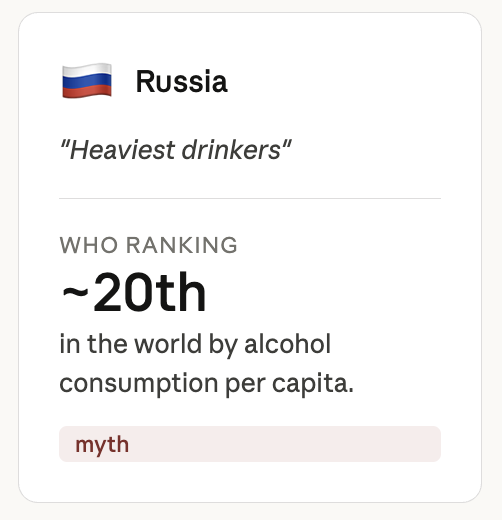
Alcohol stereotypes follow a similar pattern. Russia is almost reflexively associated with heavy drinking – yet according to WHO data, it ranks outside the top 15 countries by alcohol consumption per capita, sitting somewhere around 20th place globally. That’s not quite the podium the stereotype would suggest.
And the French and their legendary politeness? That one, perhaps, is best left to personal experience – and which arrondissement you happen to find yourself in.
Why We Rely on Stereotypes
When we step into an unfamiliar environment, we instinctively look for patterns. This could be a new market, a new culture, or a first meeting with a foreign client. Patterns reduce uncertainty and give us a place to start.
This isn’t a flaw – it’s how the brain naturally works. The human brain processes an enormous amount of information every day, and generalizations are one of the tools it uses to manage that load. When everything is unfamiliar, a broad pattern feels like solid ground. It gives us confidence to act before we have the full picture.
In business, that starting point can feel genuinely useful. A team preparing to pitch in Japan will naturally try to learn something about Japanese communication norms. A consultant entering a new European market will look for context clues. A copywriter adapting a campaign for a new country will ask: what tone works here? What references land? At this stage, generalizations aren’t the enemy – they’re a first draft.
There’s also a social dimension to stereotypes that often goes unacknowledged. They travel fast precisely because they feel true to someone – usually someone who had one vivid experience and drew a conclusion. People repeat that conclusion, simplify it, and eventually treat it as common knowledge. By the time it reaches us, it has lost its origin story entirely. We inherit the shortcut without the context that created it.
The problem begins when the first draft becomes the final version. When assumptions stop being a starting point and become a strategy, they tend to work against you. Not because they’re always wrong – but because they stop you from looking. And in cross-cultural communication, the details you stop looking for are usually the ones that matter most.
When Cultural Stereotypes Stop Working
In 2009, HSBC launched a global campaign built around the slogan “Assume Nothing.” Bold, clear, and well-suited to the brand’s international image. However, the only problem was that in several countries, the phrase was translated literally and turned into “Do Nothing” – the opposite of what the bank intended. The rebranding cost around $10 million.
It’s a dramatic example, but the pattern it illustrates is common. The assumption wasn’t wrong, but it didn’t travel well. What felt sharp and confident in one context became damaging in another.
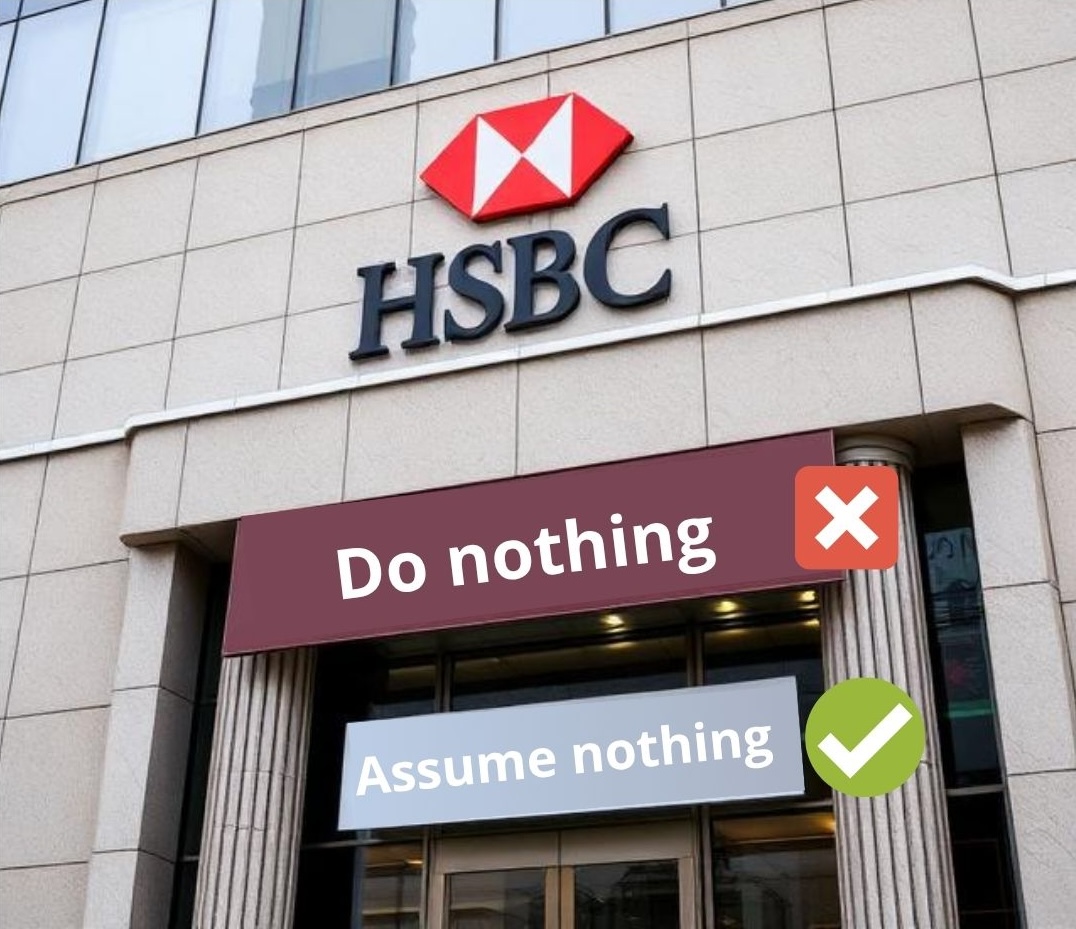
This is how stereotypes tend to fail in practice. Not with a loud mistake, but with a quiet misfire – a message that almost lands, a tone that feels slightly off, a pitch that’s technically correct but doesn’t resonate. Nothing obviously wrong. Just something that doesn’t quite fit. These patterns show up especially clearly in localization – where the gap between assumption and reality tends to have a price tag attached.
The reason, almost always, is the same: a country is not a single audience. It contains different industries, company sizes, professional cultures, and individual expectations. Treating it as one thing is where communication starts to slip.

Culture as Context
If stereotypes aren’t the answer, what is?
A useful place to start is Erin Meyer’s The Culture Map, which maps cultural differences across eight dimensions – from how directly people give feedback, to how they build trust, to how much they rely on context in communication. The French, for example, are high-context communicators relative to Americans, yet they are much more direct when it comes to negative feedback. That combination – indirect in one dimension, direct in another – is exactly what a stereotype would flatten into a single, misleading image.
What Meyer’s framework makes clear is that cultural differences are real, but they are spectrums, not fixed labels. Knowing that a culture tends toward indirect communication doesn’t tell you how a specific person, in a specific professional context, will actually respond. A Japanese colleague who studied in the US, a German manager who has spent a decade working in Brazil – context shapes people as much as culture does.
The same point runs through Geert Hofstede’s research on cultural dimensions – one of the most cited frameworks in cross-cultural studies. His data, collected across decades and dozens of countries, shows consistent patterns in how societies relate to hierarchy, uncertainty, and individualism. But patterns are not predictions. They describe tendencies, not people.
What both frameworks share is a core idea: culture is not a shortcut. It’s a starting point for asking better questions. The goal isn’t to memorize where a country sits on a scale – it’s to develop enough awareness to notice when your assumptions might be getting in the way.
Moving from Assumptions to Awareness
So where do stereotypes end and culture begin?
It starts with a shift in the question. Instead of asking “What are people in this country like?”, the more useful question is: Who exactly is this audience? What do they expect in this situation? What would feel natural to them here?
These questions don’t make things simpler. But they make them more accurate.
Consider the difference between preparing a presentation for “a German client” versus preparing for a mid-sized engineering firm in Munich whose team has been working with American partners for three years. The second version requires more thought – but it’s also far more likely to land. The stereotype gives you a costume. The context gives you a conversation.
Because people notice when something feels right – and when it doesn’t. A message built on a stereotype tends to feel written for an idea of someone rather than for the actual person reading it. The difference becomes clear in the same way a form letter is recognizable – technically correct, but clearly not written for you. A message built on context feels considered. It lands differently.
This doesn’t require deep cultural expertise before every interaction. It requires curiosity – the habit of asking one more question before assuming you already know the answer. What does this specific person, in this specific role, in this specific moment need from this communication?
Stereotypes can get you through the door. But real understanding comes from paying attention once you’re inside.

Podcast Generation Contextual Translations Video Dubbing
Delivering outstanding outcomes.