
Entering the Spanish Market: What You Actually Need to Know
🔊 Prefer listening? Hit play and enjoy the audio version 🔊
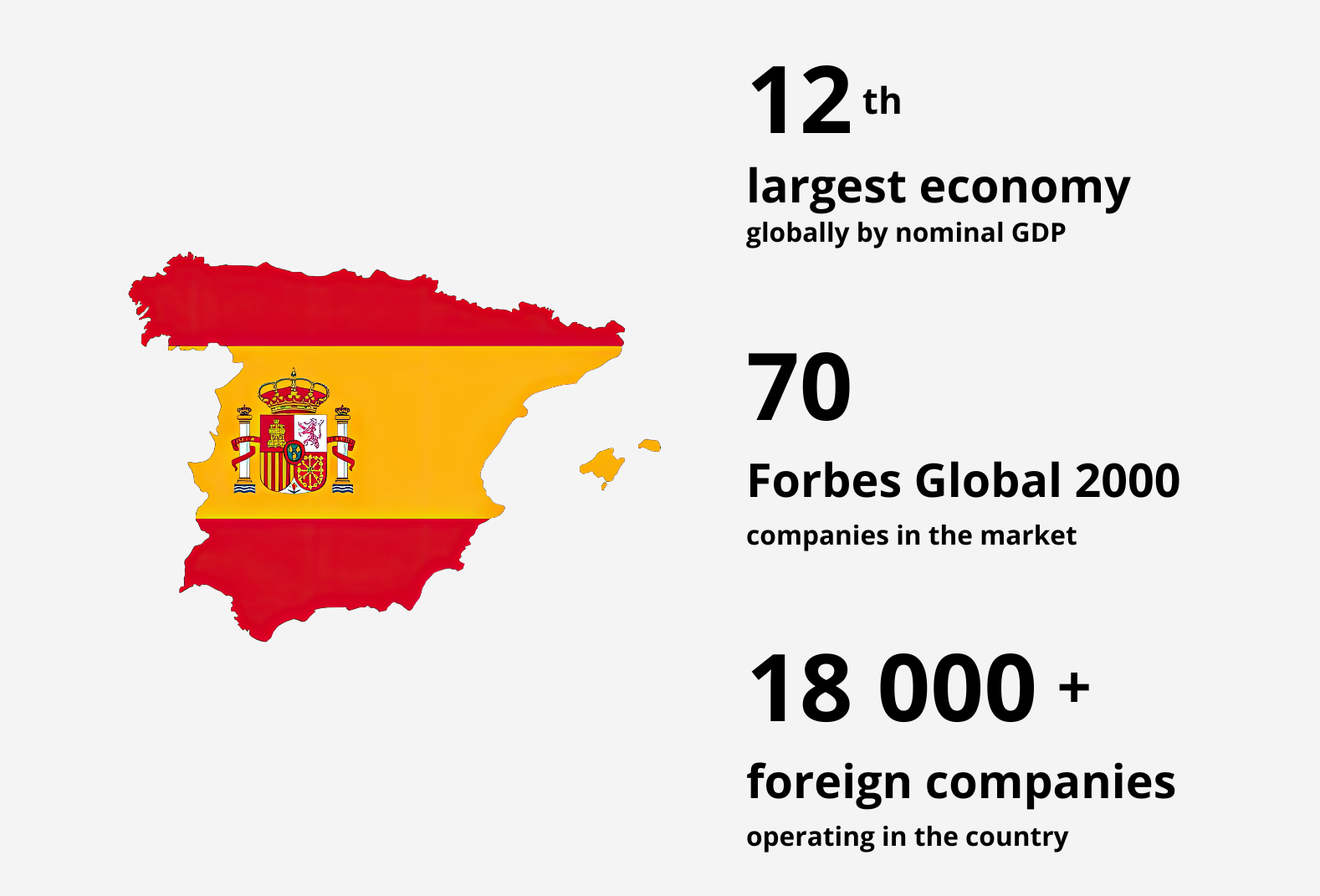
Spain looks straightforward on paper. It is the world’s 12th largest economy by nominal GDP and the fourth largest in the EU. More than 18,000 foreign companies have already set up operations there, and 70 of the Forbes Global 2000 firms are present in the market. The numbers are compelling. The opportunity is real.
And yet, foreign companies enter Spain every year with solid strategies, reasonable budgets, and genuine product-market fit – and still struggle. Not because the market isn’t there. But because Spain operates by a set of rules that aren’t written in any market research report.
Here is what actually matters.
Spain Is Not One Market
The first mistake most companies make is treating Spain as a single, uniform audience. It isn’t.
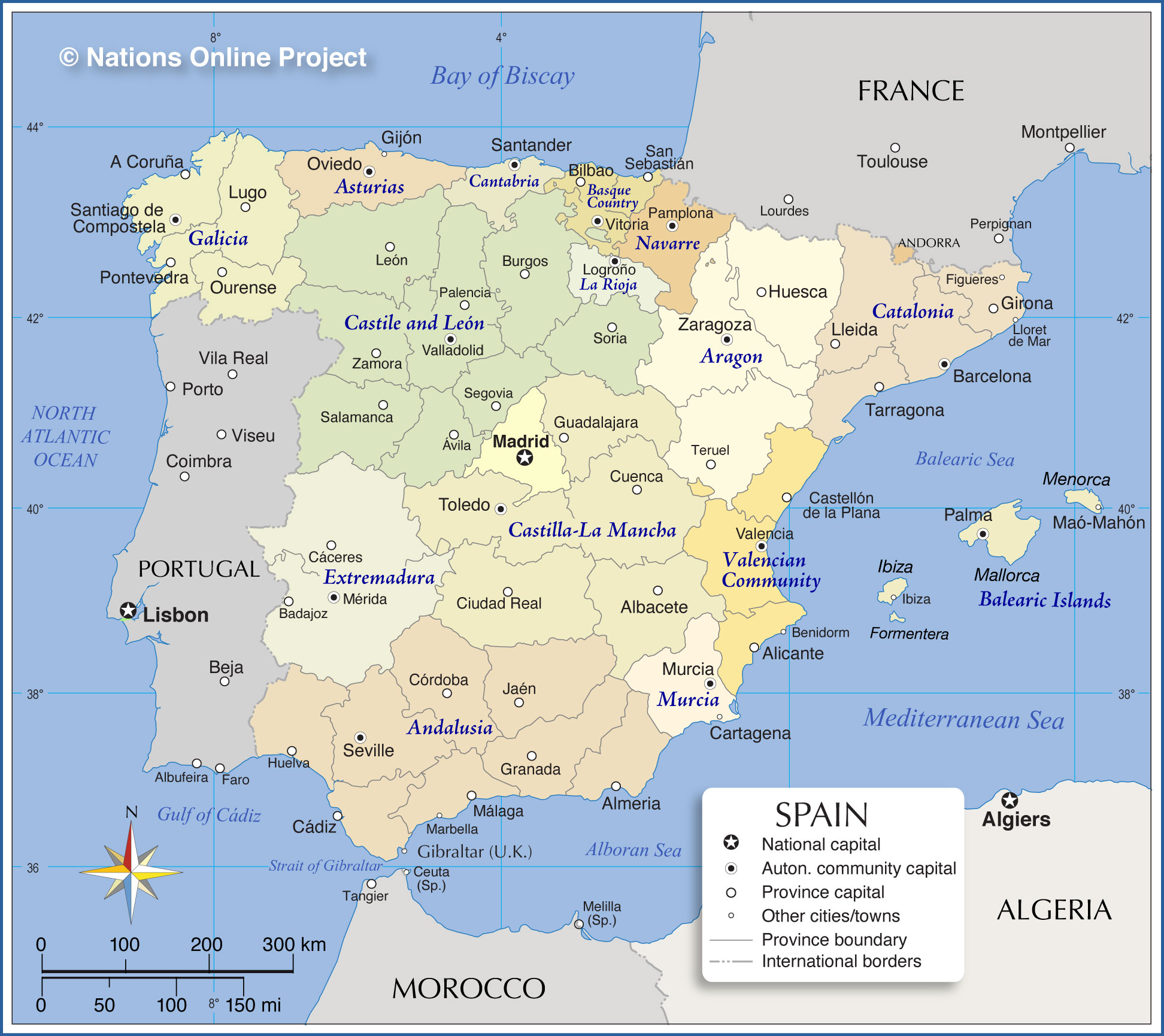
Spain’s 17 regional governments, known as autonomous communities, each carry a distinct cultural identity and varying degrees of autonomy. This directly complicates the launch of any nationwide strategy, since decision-makers may need to be consulted separately in each region.
The practical implications are significant. Each region has its own identity, business rhythm, and language. Barcelona is often described as outward-looking, entrepreneurial, and multilingual. The Basque Country is associated with industrial strength and a long-term orientation. Andalusia is generally seen as moving at a warmer, more relationship-driven pace. Madrid is widely regarded as the political and financial hub – formal, centralized, and status-driven.
Barcelona is the go-to entry point for tech companies – it hosts the largest startup ecosystem in Spain, with around 2,600 startups in Catalonia alone, ranking fifth in Europe. Madrid, on the other hand, is a better fit for companies targeting large corporates, financial services, or public sector clients, as C-level decision-makers for many of Spain’s biggest companies are based there.
Language adds another layer. In Catalonia, products are often expected to be labelled in Catalan as well as Spanish – a requirement that can impose additional costs and administrative work depending on the product category. In the Basque Country, similar sensitivities apply. Treating these as minor details is a reliable way to lose credibility before the first meeting.
Relationships Come Before Business
In many markets, a good pitch deck and a clear value proposition are enough to move a deal forward. In Spain, they are necessary but not sufficient.
Spanish professionals value personal relationships over transactional exchanges, and trust is built gradually – through shared meals, informal conversations, and genuine interest in the person across the table. This emphasis on relationships can lengthen negotiation processes significantly, as Spaniards prefer to get to know their counterparts before engaging with the details.
Face-to-face meetings are strongly preferred over written or phone conversations for anything important. Business lunches that begin around 2 PM can easily last two hours – and are typically not the place to push an agenda. Instead, they serve as the foundation for the relationship that will eventually make the deal possible.
This is not inefficiency. It is how trust gets built in this culture – and trust, once established, tends to be durable. Skipping the relationship-building phase is one of the most consistently reported mistakes by foreign companies entering Spain – it often results in negotiations stalling at a polite but indefinite “we’ll think about it,” with no clear path forward. Many of these issues stem from broader localization errors that companies make when entering unfamiliar markets, from assuming communication styles are universal to underestimating regional expectations. As explored in Accent Network’s guide to the five biggest mistakes companies make when entering a new market, successful expansion depends as much on cultural adaptation as on product-market fit.
How Communication Actually Works
Spanish communication is generally warm and expressive, and while honesty is valued, people often use diplomatic language to avoid confrontation or causing embarrassment. This creates a specific challenge for teams used to direct, Northern European or Anglo-Saxon communication styles: the feedback you receive may not reflect what your counterpart actually thinks.
Spaniards may tell you what they think you want to hear rather than what they really think, and might insist that everything is in perfect order even when it isn’t. Open disagreement at the conference table is rare – watch instead for subtle cues, and use one-on-one conversations or informal settings to get a more accurate read on where things actually stand.
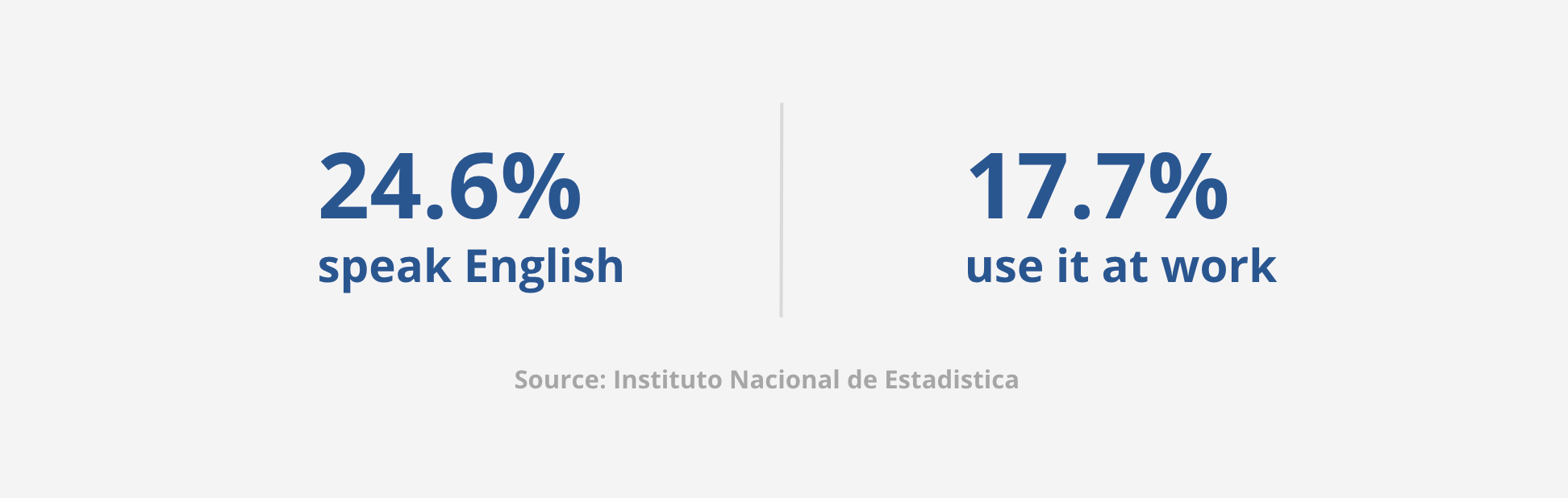
On the language question, the challenge is less about isolated cases and more about structural realities. According to data from the Instituto Nacional de Estadística, only about 24.6% of Spain’s population reports speaking English at any level, and actual use in professional contexts is even more limited, with just 17.7% using English at work regularly.
Teams operating without Spanish – or without strong local language support – face a clear disadvantage, regardless of the quality of their product or service. Despite the growing importance of English, Spanish remains the dominant working language in most companies, particularly outside multinational environments.
Decision-Making Takes Longer Than You Expect
Most Spanish companies operate with clear hierarchical structures, and decisions are typically made by senior executives who will consider the interests of the group before committing. Decision-makers tend to retain final authority, which means that getting to the right person early is not optional – it is the entire strategy.
Spanish professionals take their time and dislike being rushed when making important decisions. Timelines that would be considered standard in Germany or the Netherlands will feel aggressive in Spain. Build buffer into your project plan – not as a concession, but as a realistic expectation of how the market operates.
There is also a seasonal dimension worth noting. Summer (July-August) and Easter effectively slow the market to a standstill. Launching a campaign or expecting a signed contract during these periods is optimistic at best.
From Rapid Expansion to Moderation
These operational realities are unfolding against a shifting macroeconomic backdrop.
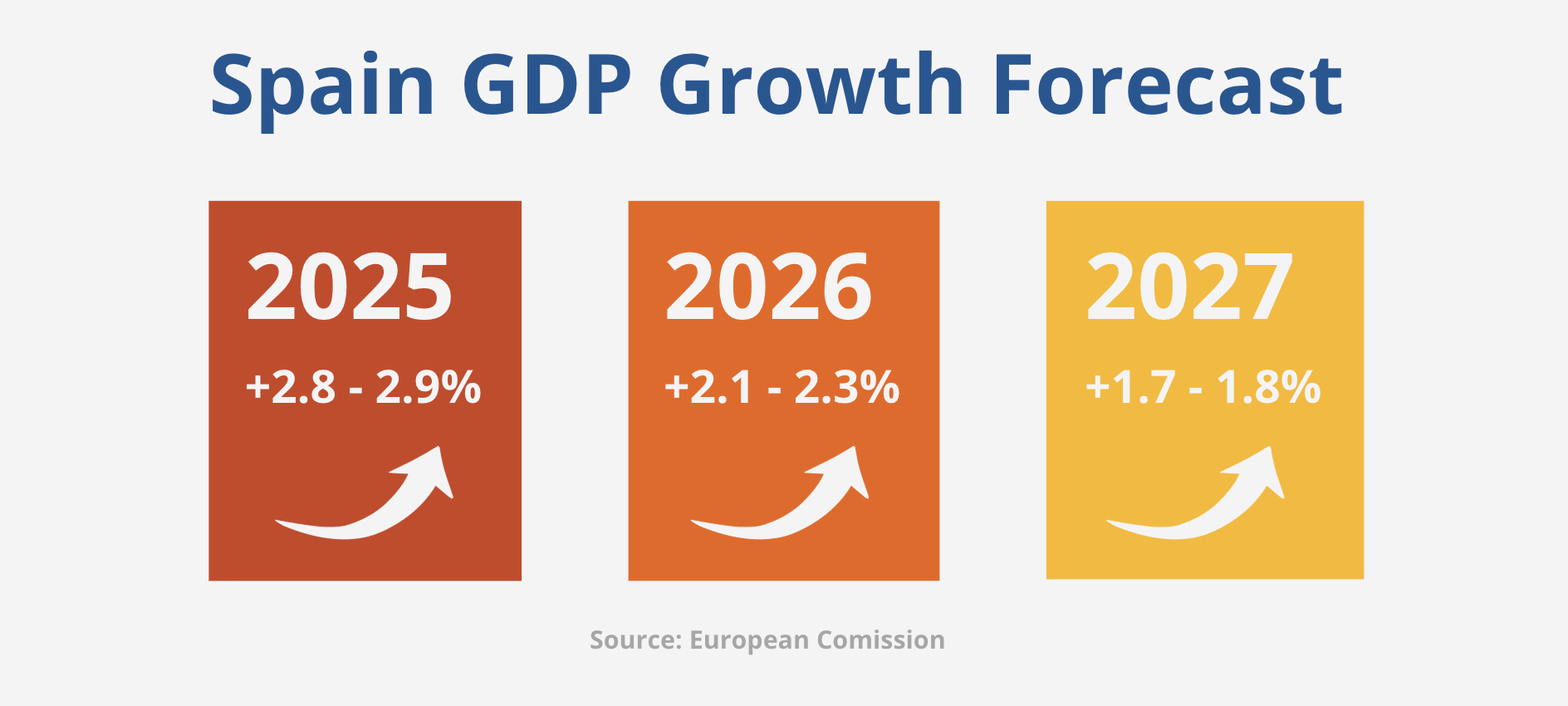
After strong growth of around 2.8-2.9% in 2025, Spain’s GDP growth is expected to moderate to roughly 2.1-2.3% in 2026 and fall further to around 1.7-1.8% in 2027. This is not a warning sign – it reflects a transition from post-pandemic recovery to a more normalised growth path. Despite this relative outperformance within the eurozone, the nature of that growth is changing: future expansion will depend increasingly on productivity gains rather than labour force growth or external tailwinds. For companies entering now, that shift matters – it means the market will reward depth of local knowledge and long-term positioning over speed of deployment.
What This Means in Practice
Entering Spain successfully is not about having the right product or the right price. It is about arriving with the right posture – patient, relationship-oriented, locally aware, and genuinely committed to operating within the market rather than at it.
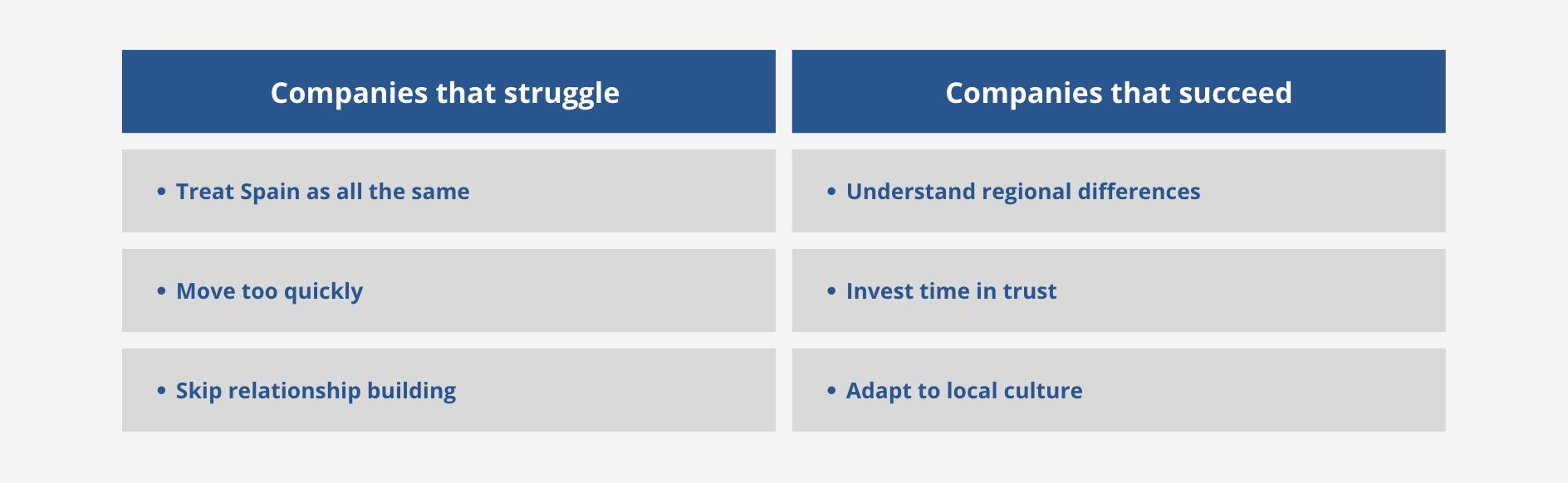
The companies that struggle tend to share a common profile: they treat Spain as an extension of a market they already know, underestimate the regional complexity, and move too quickly past the relationship-building phase. The companies that succeed treat the early investment in trust and local knowledge as part of the strategy, not as a delay to it.
Not sure where to start?
Navigating a new market – especially one as regionally complex as Spain – takes time, local knowledge, and the ability to communicate in a way that actually resonates with your audience. That’s exactly what Accent Network helps companies do: from localizing your messaging to understanding the cultural context that shapes how your offer will land. Because in Spain, how you say something matters as much as what you say.